

Executive Summary
IoT Edge AI in Life Sciences is accelerating a new phase of digital evolution across healthcare, agriculture, diagnostics, biotechnology, and animal health. The convergence of IoT, edge computing, and artificial intelligence (AI) is reshaping how data is captured, processed, and translated into action. Together, these technologies enable connected ecosystems, real-time insight generation, and increasingly autonomous decision-making at a scale that was previously impractical.
As data volumes expand and operational complexity rises, organizations across the life sciences value chain face pressure to improve accuracy, efficiency, and sustainability simultaneously. In this environment, IoT Edge AI in Life Sciences is no longer a niche advantage. It is quickly becoming a foundational capability for modern life sciences operations.
This report examines how IoT, edge computing, and AI are transforming the sector, identifies cross-domain opportunities and risks, and provides strategic direction for organizations seeking to lead in a digitally accelerated future. NexRevo Bioinformatics supports organizations globally in designing, deploying, and operationalizing IoT Edge AI in Life Sciences with scientific rigor and enterprise-grade reliability.
A Sector Approaching Intelligent Transformation
Life sciences systems, whether in clinical environments, agricultural fields, laboratories, or livestock operations, generate continuous streams of biological, environmental, and operational data. Historically, much of this information remained underutilized due to manual workflows, fragmented infrastructure, limited interoperability, and insufficient analytical capacity.
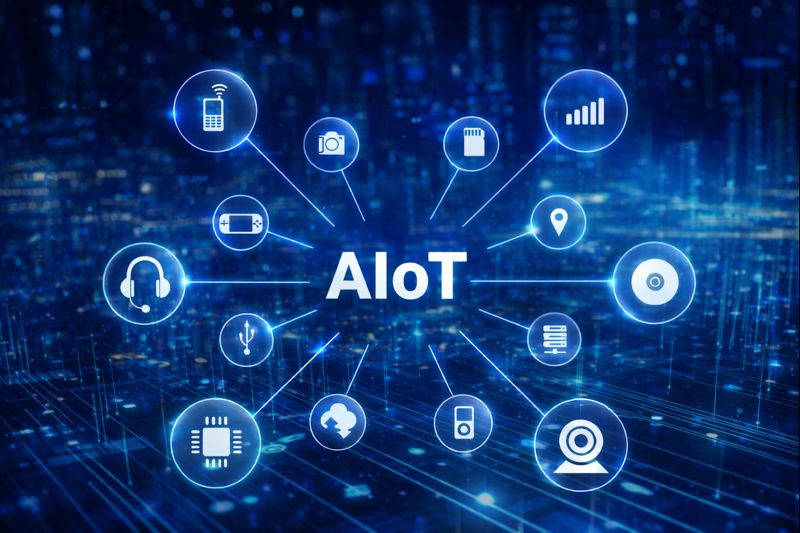
IoT introduces high-frequency data capture through sensors, wearables, imaging systems, lab instruments, and monitoring devices. Edge computing brings processing closer to the point of generation, reducing latency and enabling resilience in low-bandwidth or intermittently connected environments. AI transforms signals into intelligence by detecting anomalies, forecasting trends, and supporting decision automation.
Together, IoT Edge AI in Life Sciences enables continuous patient monitoring and early risk detection, precision agriculture and automated field decisions, predictive livestock health management, accelerated diagnostic workflows through intelligent imaging, and improved operational efficiency with lower resource consumption. This shift is not incremental digitization. It represents a structural transformation in how data becomes action across the life sciences value chain.
NexRevo Bioinformatics supports this shift by integrating expertise across computational biology, IoT engineering, AI and ML development, analytics, and cloud-to-edge architectures to build IoT Edge AI in Life Sciences systems that are scalable, interoperable, and operationally robust.
IoT Adoption Is Accelerating Across Life Sciences
IoT adoption is expanding rapidly due to declining sensor costs, improvements in connectivity, stronger device reliability, and growing demand for measurable operational outcomes. While maturity varies by sector, the overall direction is consistent. Decisions are moving closer to the point of activity, supported by real-time data and local intelligence.
Agriculture continues to scale adoption through soil and climate sensors, drone-based imaging, automated irrigation, and yield forecasting. Healthcare adoption is expanding through wearables, remote monitoring, and connected hospital infrastructure. Animal health is growing through livestock wearables and herd platforms that integrate operational data with veterinary insights.
Across these domains, the core objective remains the same. Enable reliable, real-time decision-making where it is needed most, with minimal delay and high operational continuity through IoT Edge AI in Life Sciences.
Where IoT, Edge, and AI Are Creating Sector-Level Impact
Healthcare: From Episodic Care to Predictive Systems
Healthcare is transitioning from reactive, episodic models to continuous, intelligence-driven care. IoT devices collect vital data across inpatient and outpatient settings. Edge systems process signals locally to avoid latency and reduce dependency on bandwidth. AI models analyze patterns over time to anticipate deterioration, support triage, and improve diagnostic precision.
High-impact applications include intelligent ICU monitoring with automated alerts, remote patient monitoring that extends care beyond hospital walls, AI-assisted imaging for diagnostic accuracy, and connected medication delivery systems that improve safety through validation and monitoring. These systems improve decision speed, reduce readmissions, strengthen outcomes, and enhance continuity in high-demand environments enabled by IoT Edge AI in Life Sciences.
Agriculture: Real-Time Farming Intelligence and Autonomous Action
Agriculture has become one of the most practical deployment environments for IoT Edge AI in Life Sciences because conditions are local, variable, and time-sensitive. IoT sensors monitor soil moisture, nutrients, and microclimates continuously. Edge nodes process field data locally to trigger immediate actions such as irrigation, dosing, ventilation, or greenhouse control. AI models enhance performance through yield forecasting, early stress detection, and disease risk identification using drone or imaging inputs.
This operating model improves responsiveness and sustainability by enabling precision irrigation, fertilizer optimization, greenhouse automation, pest and disease detection, and predictive planning for climate variability. The result is lower waste, stronger yields, and faster interventions when conditions change.
Animal Health: Predictive Herd Management at Scale
Animal health is entering a new phase of connected monitoring and predictive intervention. Wearables track activity, temperature, feeding behavior, mobility, and stress. In remote settings where bandwidth is constrained, edge processing becomes essential for local anomaly detection and rapid response. AI models interpret behavioral and physiological patterns to detect early disease, predict breeding cycles, and identify stress signals that reduce productivity.
At scale, IoT Edge AI in Life Sciences enables real-time livestock monitoring, AI-supported veterinary diagnostics, automated feeding and environmental control, and outbreak surveillance. The outcome is better herd visibility, reduced mortality and medical cost, improved yield, and earlier intervention to prevent disease spread.
Why Edge Computing Is Becoming Non-Negotiable
As life sciences become more connected and data-intensive, edge computing moves from an optional architecture choice to a core operational requirement. Many critical decisions are latency-sensitive, while many environments cannot depend on continuous cloud connectivity. Edge computing reduces reliance on centralized infrastructure for time-critical tasks, supports data sovereignty and privacy requirements, enables operations in low-bandwidth settings, and strengthens resilience through local autonomy.
As adoption expands, edge capability becomes inseparable from the future operating model of IoT Edge AI in Life Sciences, especially in clinical monitoring, field automation, and distributed animal health environments.
What the Convergence of IoT, Edge Computing, and AI Unlocks
The convergence of IoT, edge computing, and AI creates a new foundation for transformation. It enables unified digital platforms that connect hospitals, farms, labs, supply chains, and regulatory systems into interoperable ecosystems. This improves traceability, coordination, and system-wide decision velocity across IoT Edge AI in Life Sciences implementations.
It also enables increasingly autonomous operations, where systems can self-regulate based on real-time conditions. Precision irrigation can continuously adjust to soil and climate signals, while clinical environments can adapt monitoring thresholds dynamically based on patient baselines. These models reduce manual load and shift skilled staff toward higher-value work.
Predictive intelligence is another major unlock. Algorithms can detect subtle signals that are difficult to identify consistently across patient vitals, crop imagery, and livestock movement. This enables earlier intervention, reduces adverse outcomes, and strengthens performance across life sciences operations.
Finally, the convergence drives measurable resource efficiency. Real-time sensing combined with intelligent analytics optimizes water, fertilizer, energy, medication delivery, and operational inputs. This directly supports sustainability, cost control, and regulatory alignment, priorities that are becoming structural constraints in many markets adopting IoT Edge AI in Life Sciences.
Adoption Risks That Leadership Must Manage
IoT Edge AI in Life Sciences creates meaningful upside, but scaling requires disciplined governance. Sensitive data protection is central because life sciences systems process patient information, genomic data, diagnostics, agricultural insights, and livestock health records. Distributed devices and edge nodes expand the attack surface, increasing the importance of encryption, identity governance, secure device management, auditability, and hardened deployment patterns.
Connectivity limitations are another constraint. Many environments, including rural clinics, farms, and remote livestock operations, operate with unstable bandwidth. Cloud-only approaches can fail to deliver timely insight. Edge processing ensures continuity, with intelligent synchronization when connectivity returns.
Model accuracy and domain variability require sustained attention. Biological and environmental systems vary across populations, crop types, species, genetics, and climate. Generic models are rarely sufficient at scale. Domain-specific calibration, continuous validation, and model governance are required to avoid misleading outputs and preserve trust.
Finally, skill availability can become a limiting factor. Scaling these systems demands capability across bioinformatics, data engineering, AI and ML, IoT architecture, edge infrastructure, and cybersecurity. Organizations must develop internal capability while leveraging specialized partners to accelerate execution without compromising quality.
Strategic Direction for Life Sciences Leaders
To capture value at scale, leaders increasingly adopt edge-first design for latency-sensitive and reliability-critical workflows. They prioritize modular and interoperable ecosystems to avoid lock-in and ensure integration across device diversity. They invest in domain-specific AI models aligned to real clinical, agricultural, and animal health workflows, supported by validation and governance. They treat cybersecurity, compliance, and traceability as strategic design requirements rather than downstream IT tasks. They enable cross-sector collaboration because many breakthroughs occur at the intersection of healthcare, agriculture, diagnostics, biotech, and veterinary systems.
Outlook: Life Sciences in 2030 and Beyond
Over the next decade, IoT Edge AI in Life Sciences is expected to become embedded into core life sciences operations. Hospitals will increasingly operate as intelligent command centers with continuous monitoring and predictive workflows. Farms will shift toward autonomous decisioning through drones, sensors, robotics, and predictive planning. Livestock systems will become more preventive and predictive, reducing outbreaks while improving yield. Diagnostics will accelerate through connected labs, intelligent imaging, and real-time analysis networks.
This evolution will redefine what digital leadership means in life sciences. The differentiator will not be isolated pilots. It will be enterprise-scale operating models where science, data, and automation are integrated end-to-end through IoT Edge AI in Life Sciences.
Conclusion
IoT Edge AI in Life Sciences represents one of the most consequential technology shifts in the sector. It transforms how data is captured, processed, and acted upon, enabling connected, intelligent, increasingly autonomous, and predictive systems across healthcare, agriculture, diagnostics, biotechnology, and animal health.
Organizations are already realizing benefits such as faster decisions, stronger outcomes, improved resilience, and better resource efficiency. However, reaching full value requires more than adopting devices or models. It requires an end-to-end transformation spanning architecture, interoperability, governance, security, skills, and cross-sector alignment.
NexRevo Bioinformatics supports organizations in building this future with scientific rigor and enterprise-grade execution. With the right strategy and operating model, IoT Edge AI in Life Sciences will not only improve operations. It will redefine what is possible across the global life sciences landscape.